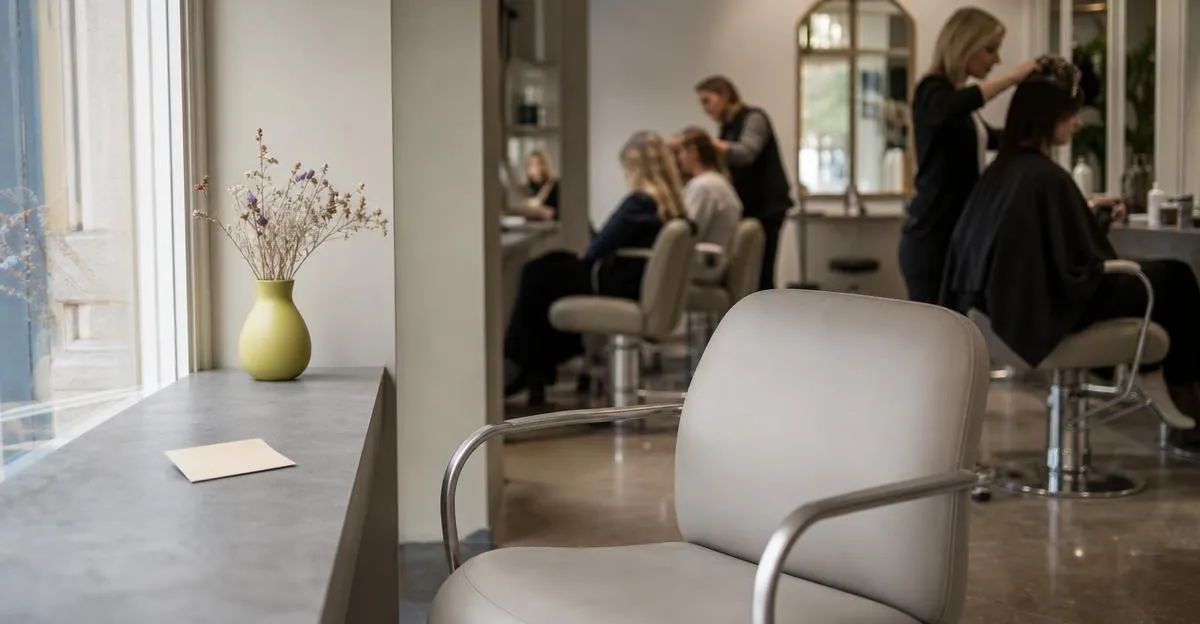
An empty chair cannot be recovered: the hour has passed. The good news is that missed appointments come from a short list of ordinary causes, and almost every one of them can be dealt with without an argument.
Why people do not turn up
The causes fit on one hand. The customer forgot, and the more days between the booking and the appointment the more often that happens. Something came up and there was no way to cancel outside your opening hours. Two appointments were booked to be safe. Or the booking was an impulse that never became a decision.
Almost nobody disappears out of spite. Someone who does not turn up usually had no easy way to warn you: in the evening the phone rang out, and by the next morning saying it felt late.
Measure your rate before changing anything
Your no-show rate is appointments not honoured divided by appointments booked, times a hundred. Count it for four weeks and split it by weekday, by service and by customer type, new or regular. Cancellations that arrived in time are not no-shows: count those separately, because that slot can still be sold.
Without the count every remedy is a bet. With it you nearly always find the problem is concentrated: the first slot of the morning, Saturdays, new customers, long services booked three weeks ahead.
The reminder: when to send it
Two moments matter. The confirmation goes out at once, in the minute the appointment is agreed, and its job is to put in writing what was said out loud. The reminder goes out between twenty-four and forty-eight hours before: early enough for the customer to move the slot, late enough to be remembered.
For long appointments, or ones booked far ahead, add a third message on the morning itself. Past three messages you become a nuisance, and an irritated customer cancels instead of confirming.
How to write a reminder people answer
A good reminder is four lines: your business name first, then the service, the day and the time, the length and the address. Close with a single question that can be settled in two seconds, confirm or move. Two requests in one message get neither of them done.
Write the way you speak, with no shouting capitals and no penalty threats in the reminder itself. The message lands better on WhatsApp than by email: it is read on the lock screen and the reply costs one tap.
Make moving the slot easier than vanishing
Most no-shows are cancellations nobody made. When cancelling is awkward, or impossible outside opening hours, the customer picks silence. Whoever answers the phone at ten in the evening turns that silence into a free slot with sixteen hours of notice, and that is enough to call somebody else.
Keep a short waiting list and ring them when a gap opens. An assistant that answers at any hour takes the cancellation, offers another time and updates you on WhatsApp and in Google Calendar: a moved slot is the same money, at a different hour.
Deposits and rules: when they earn their place
A deposit makes sense where the gap is expensive: a four hour session, a reserved room, a service that occupies two people. Ask for a small amount, twenty to fifty euros, say it while the booking is being taken and repeat it in the confirmation. A rule announced afterwards is an argument, not a rule.
For a twenty minute haircut a deposit costs you more customers than it saves. There a long memory works better: note who misses twice and, on the third booking, offer only the hours you can afford to lose.